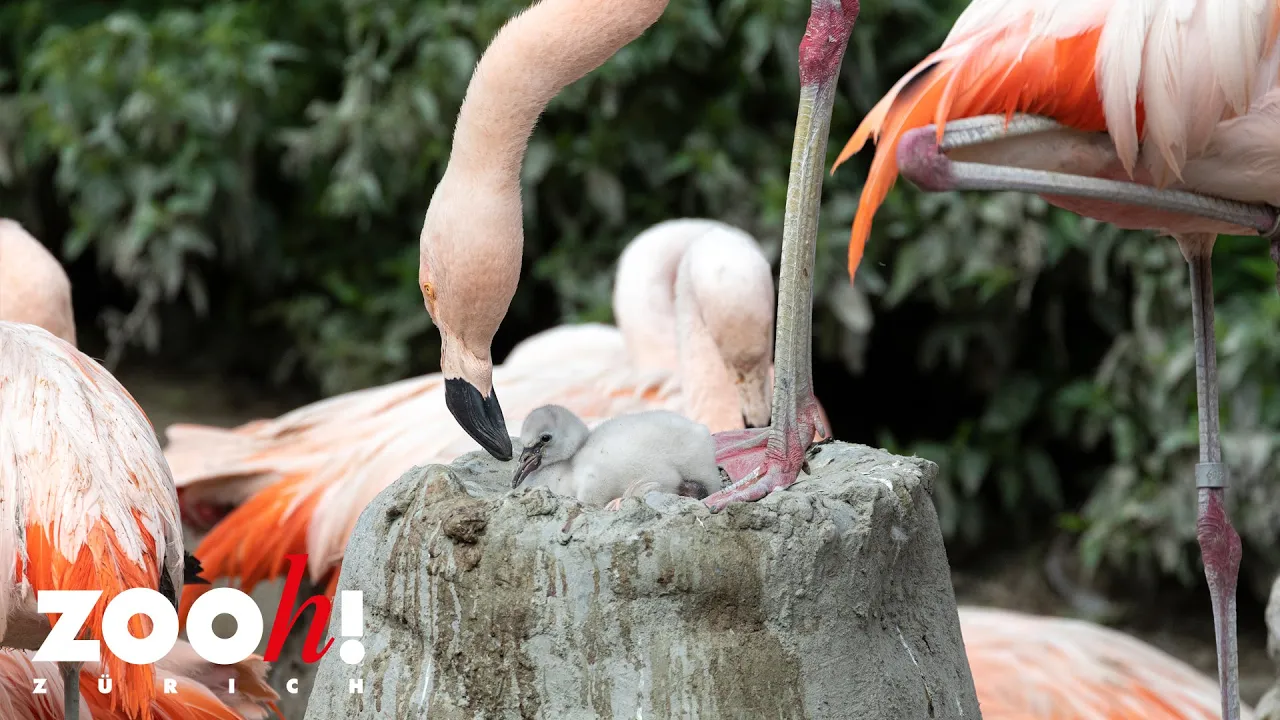
Flamingos hatch with grey-white plumage. They only develop their characteristic pink colouring by absorbing pigments from their diet.
NT
Taxonomy
Phoenicopteridae, Phoenicopterus (3 species)
Habitat
saline lakes up to 4,500 metres above sea level, sea shores
Behaviour and ecology
ground-dwelling, in shallow waters, active during the day
Migratory behaviour
seasonal within its breeding range; does not breed in the Chaco region
Taxonomy
Phoenicopteridae, Phoenicopterus (3 species)
Habitat
saline lakes up to 4,500 metres above sea level, sea shores
Behaviour and ecology
ground-dwelling, in shallow waters, active during the day
Migratory behaviour
seasonal within its breeding range; does not breed in the Chaco region
Impressionen
Mit seinem grossen gebogenen Schnabel filtert der Flamingo Nahrung aus dem Wasser. Foto: Zoo Zürich, Nick Soland
Flamingos bauen Bruthügel für ihre Eier. Foto: Zoo Zürich, Tim Benz
Flamingo-Eltern füttern ihre Küken mit einer speziellen Kropfmilch. Foto: Zoo Zürich, Enzo Franchini
Flamingos kommen auch mit tiefen Temperaturen gut zurecht. Foto: Zoo Zürich, Fabio Süess
Erst aufgrund der Nahrung färbt sich das Flamingo-Gefieder rosa. Foto: Zoo Zürich, Enzo Franchini
Flamingo-Fakten
4500
Flamingos können in Höhenlagen von bis zu 4500 m. ü. M. leben.
1951
Der Zoo Zürich hält seit mehr als 70 Jahren Flamingos.
60
Flamingos können bis zu 60 Jahre alt werden.
So klingen Flamingos
Junge Chileflamingos